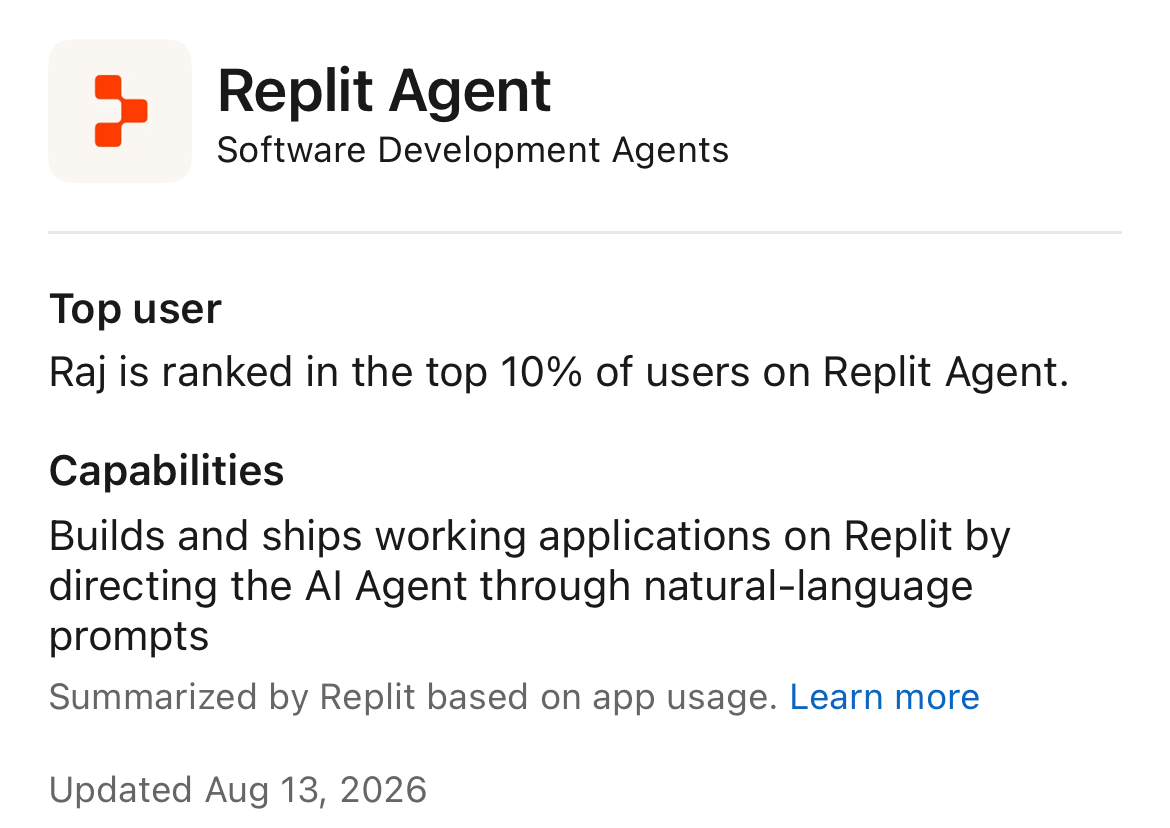
I’ve played extensively with AI tools this year and even built an app from scratch that replicates traditional Salesforce functionality (for a side project): Link
After remotely following the news and conversations coming out of Dreamforce during the last three days—and especially Marc Benioff’s interview with the All-In hosts—my biggest takeaway is the following:
AI is moving from something companies experiment with to something they are starting to build into everyday work.
Salesforce is betting that AI agents will work alongside employees, using company data and systems to get things done. Agentforce, AIforce and the new Koa model are all part of that push.
A few things stood out to me
SaaS isn’t going away, but it is changing.
Benioff pushed back in the All-In Podcast that AI will kill software companies. His point is that the real value isn’t just the software screen we use. It’s the data, processes, security and business information behind it.
The podcasters tried to diminish the doomsayers’ narratives around job loss and risks to humanity citing Andrew Yang and Bernie Sanders’ callouts as not backed by actual facts. Benioff echoed their beliefs.
But if AI agents start doing more of the work, companies may need fewer software licenses for people. Pricing will likely shift toward how much AI is actually used.
AI won’t necessarily mean fewer employees—but it will change jobs.
AI can take over a lot of routine work: entering data, answering simple customer questions, doing basic research and creating reports. I’ve used another AI platform Microsoft Copilot to capture meeting minutes, action plans, and build project plans in minutes —- busy work that can easily occupy half of the workweek.
That doesn’t mean the people go away. Some will move into different roles. Others may be asked to handle the harder problems that AI can’t solve. ‘Human in the loop’ will be critical for customer success (article referenced below).
One concern I had is what happens to entry-level jobs. If AI does much of the basic work, how do young employees get the experience they need to move into more senior positions? My advice to young people is to build apps like I have. It’s that easy to get started. Stop scrolling. Start building.
Another concern I have is how difficult it is to unlock AIForce versus frontier LLMs and vibe-coding apps. If context and domain expertise drive the new AI technologies, why is Salesforce harder to unlock? I jumped right into Replit.com and built an app as mentioned above. Twenty thousand lines of code via agent were made possible by using my deep CRM domain and product knowledge. It was a nontrivial project requiring several weeks of intense work. A regular enterprise version of this would have taken a team several months. Going through the process of an AIForce trial followed by a negotiation with a live AE —- only to learn about the exorbitant costs —- seems outdated in 2026 for an SMB play. It’s clear that Salesforce is targeting Enterprise customers as one would expect with the massive partnership announcements.
Then there’s the cost.
This may be one of the biggest issues for CFOs.
AI sounds inexpensive when you look at the price of an individual interaction. But multiply that by thousands of employees, agents and millions of tasks, and the bill can grow quickly.
And the AI subscription isn’t the whole cost. Companies also have to pay for data cleanup, integration, security, training and managing these new systems. How will they do this with their third party consultants? Will they exclusively turn to Salesforce Professional Services. It was much easier responding to an RFP based on the product and seat-based licensing model to go with anticipated professional services. Estimations were almost cookie cutter in the old Salesforce world. Now, it’s uncertain how professional services will be costed out. Is this good or bad news for large systems integrators?
Change management is the line item most often cut. Moving from structured systems to ones where users decide what to ask makes adoption harder, and most companies never won adoption of the structured version.
So the important question isn’t: how much does the AI cost? It’s ‘are we actually saving money or creating more value by using it?’
My budget for my SMB app was 100 bucks. I’m up to 700 now based on AI usage models. And this doesn’t count any of my hours spent building it. What happens to a customer with an annual 10M Salesforce license spend? Does the usage model spiral the budget to 70M? I don’t see how that’s possible while justifying ROI.
AI Safety
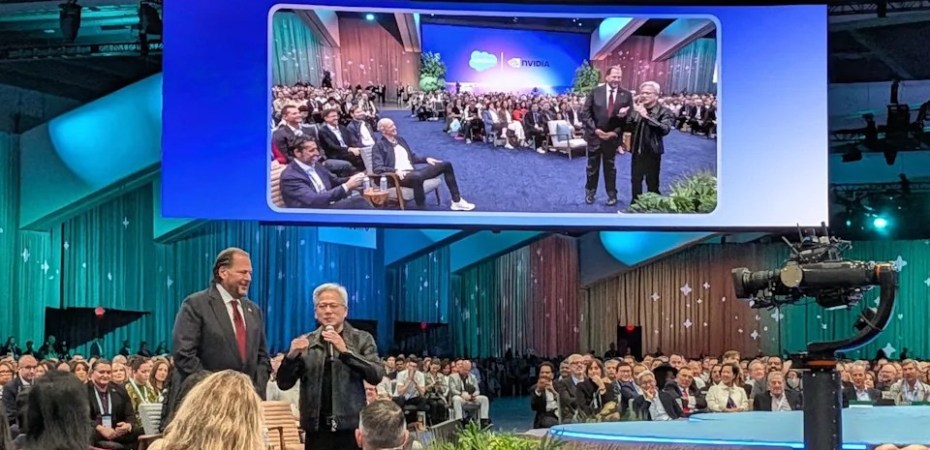
Nvidia’s Jensen Huang and Anthropic’s Dario Amodei joined Marc Benioff on stage, and safety came up directly. Huang’s take: safety is “paramount,” but it’s fundamentally an engineering problem—test before you ship, regulation or not. Amodei pushed the other direction, telling Benioff the industry needs to slow down and hold itself to real standards, not just get better at self-critique. Salesforce is building its trust pitch on exactly that: zero data retention, security tested repeatedly, “your data is your data.” If Koa and AIForce are going to touch 27 years of CRM data across thousands of companies, safety isn’t a separate conversation from cost. It’s why the cost conversation is even possible.
The bigger takeaway
For me, Dreamforce wasn’t really about new Salesforce products.
It’s about a bigger change in how companies work. The red stapler finally goes away.

AI will handle more of the routine tasks. People will spend more time on judgment, relationships and the problems that don’t fit neatly into a workflow. ‘Human in the loop’ was a big part of the conversation.
The companies that get this right won’t necessarily be the ones using the most AI.
They’ll be the ones that figure out what AI should do, what people should continue to do, and whether the whole thing actually makes the business better.
Articles/info for more deep diving:
https://www.theinformation.com/articles/marc-benioff-said-ai-easy-crazy-team-salesforce-proved-wrong

