
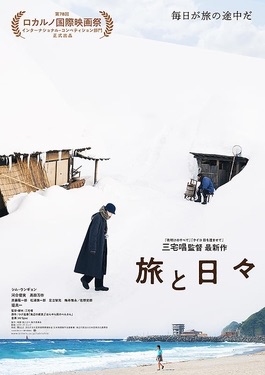
Learned this concept while watching a Japanese film: Two Seasons, Two Strangers (movie wiki)
There’s an entire genre of autobiographical I-novels unique to Japan. Based on manga short stories, the film focused on an autobiographical narrative of a Korean immigrant screenwriter in Japan.
A meaningful line in the movie by the main character is when she ponders (in Japanese), “Things happen in life that can’t be put into words. I just want to stand there forever, far away from words. But words always take hold of me without fail.” This is subtle reflection of the Japanese concept of mono no aware (物の哀れ) about the wordless awareness of impermanence.
Like the fictional screenwriter, I actually entered Japan many years ago not knowing the language. Like this character I had a sense of awe of the people, places, and things. It got lost when all expressions pointed to words. I became wordy in thought as I went deeper into the culture. My Japanese language skills remained limited, but the cultural knowledge vastly expanded. The excitement of the culture started to fade as thoughts took over.
The movie drifts to a snow-filled getaway as the main character struggles to overcome her writer’s block after experiencing the loss of her filmmaking mentor in recent days. It ends with her facing (or enjoying?) the elements of immersive nature in a snow covered terrain.
It seems that the sense of awe that comes from nature heals and helps one overcome stress and burnout. The characters in this movie all seemed to be getting away from something in their lives.
As a takeaway, the reflective nature of the I-novel (that inspired this movie) makes it worth exploring. It also posits the need for immersion in nature. As a reference, I posted Tim Ferriss’ convo with neuroscientist Andrew Huberman validating this premise: Link
[Written without AI]

