Dreamforce overtaken by 🤖 / article review

This year’s Dreamforce will be a special one. There’s much hope and lots of trepidation.

I read the LinkedIn article, â€œAnthropic’s Trojan Horse?” by George Roukas.

[btw, I don’t know George]

The core argument is that AI assistants may gradually become the main interface for enterprise work, potentially weakening the position of traditional SaaS applications such as Salesforce. 

Key takeaways

  • The interface is shifting from applications to AI.
    Employees may increasingly interact with Claude or another AI agent rather than directly using Salesforce, CRM screens, dashboards, and workflows.
  • The real strategic question is: who owns the workflow?
    If Claude becomes the place where users perform their work while Salesforce becomes merely a backend data source, much of the application’s perceived value—and potentially its pricing power—could migrate to the AI layer.
  • AI could unbundle SaaS one workflow at a time.
    Traditional applications don’t necessarily disappear overnight. Instead, individual features and workflows can be replicated or orchestrated by AI, gradually reducing the need for expensive software seats.
  • Salesforce’s partnership with Anthropic is interesting and risky.
    It gives Claude access to Salesforce’s enterprise ecosystem, while Salesforce gains access to a powerful frontier model. But the partnership also potentially puts the AI in the driver’s seat. 
  • The durable moat may be the data and governance layer—not the UI.
    Several article commenters highlighted that structured data, permissions, workflow rules, context, integrations, auditability, and governance may be more defensible than the application’s screens themselves. 
  • “Just connect the AI to the database” isn’t enough.
    Enterprise applications contain lots of business workflows and knowledge: which fields apply to which situations, which data is deprecated, who can modify what, and how processes should operate. An AI agent needs that context to avoid producing technically valid but operationally wrong results.  
  • There is a significant governance/security risk.
    If an AI agent bypasses the application’s UI and interacts directly through APIs, controls that were enforced only in the UI may no longer protect the organization. 
  • The maintenance problem doesn’t disappear.
    It’s easy to build an impressive AI workflow quickly; much harder to recreate the underlying permissions, audit trails, reliability, integrations, governance, and long-term maintainability that mature enterprise software provides.  
  • The biggest question is who owns the policy.
    One particularly useful framing from the discussion: if business rules and policies increasingly live in the AI layer rather than the application, the underlying SaaS product becomes more replaceable.  
  • This isn’t just a Salesforce story.
    The same dynamic could affect virtually every enterprise SaaS category—including travel technology, collaboration, CRM, HR, finance, and other systems of record.

In summary:

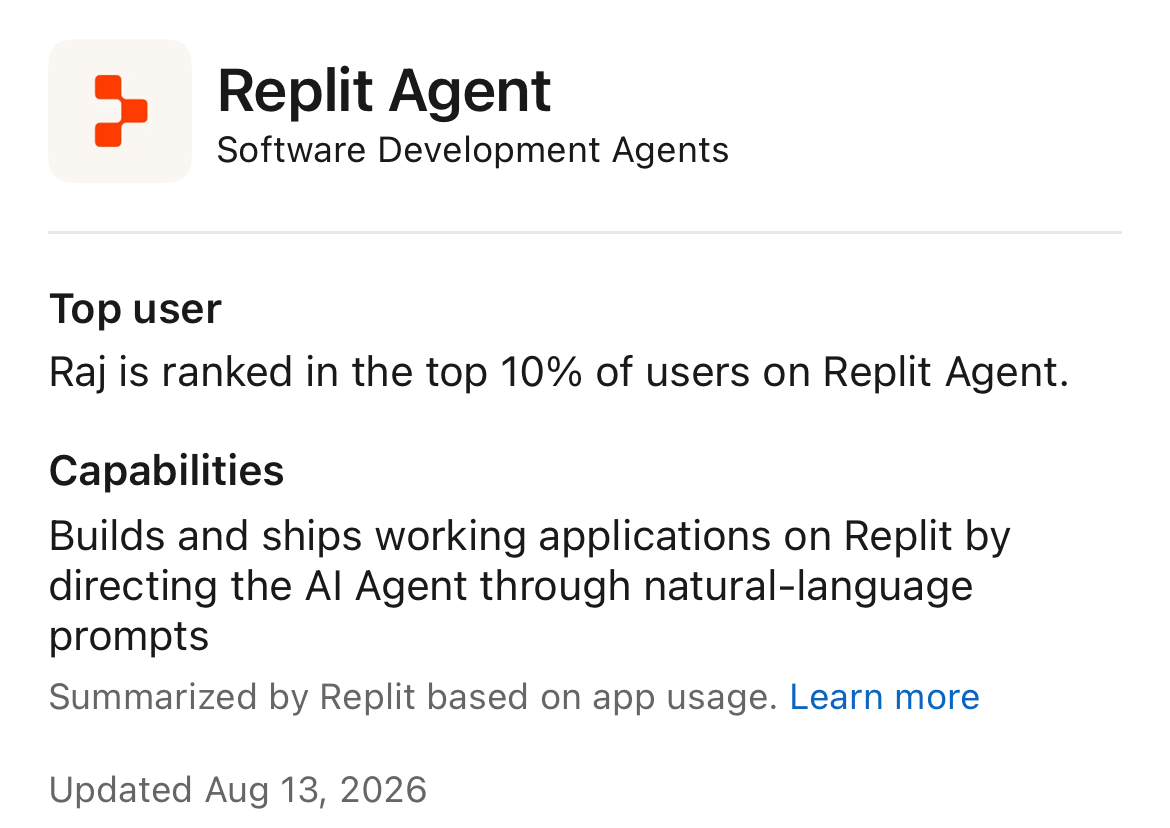
To confront my fears, I stopped watching this movie. As a summer project I built an app using an AI tool at a tiny fraction of the cost of Salesforce. All the purported Salesforce modules were factored in the buildout including Marketing and Experience Cloud without ever needing a single SFDC license. I didn’t need a technical consulting partner or a real human smarter than myself.

As the article portends, the data and maintenance layer, along with security controls still needed substantial work. My industry knowledge and CRM skills came in handy.

My AI experience blew me away. My application (eventcarpooling.com) worked after twenty thousand lines of code came to fruition —- guided by my strong process knowledge and SaaS savvy. I became the de facto forward deployment engineer, product leader, quality control manager, and head of growth —- all in one! I found friends and family to become my beta users and testers. 😆

I don’t know how long it will take for AI tools to close this gap themselves. Can my app run without me and be available worldwide? Not yet. Could I afford a massive expansion using expensive American AI products? Heck no! Would I switch to Chinese models? No plans.

It will be interesting to hear from the horses’ mouths next week at Dreamforce.