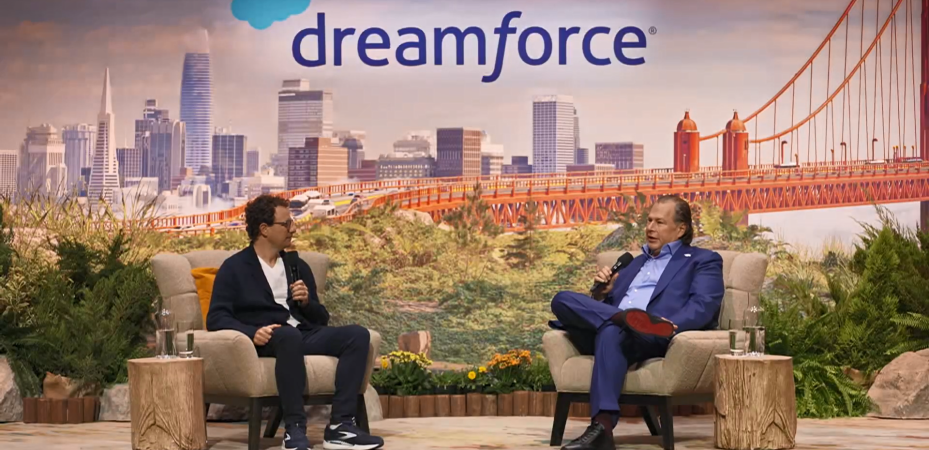
Dreamforce just wrapped, and the headlines are all big partnerships: Nvidia, Anthropic’s Claude and others. The question I can’t shake isn’t what Salesforce announced. It’s what happens to Salesforce when the agent, not the human, is the user.
My take: this is less a threat than a transition, and Salesforce looks well placed to lead it.
The recent SaaStr podcast that got my attention: https://podcasts.apple.com/us/podcast/the-official-saastr-podcast-saas-founders-investors/id1089973241?i=1000790474884
SaaStr (Jason Lemkin founder) reports running with about 3 humans and 21+ AI agents. Their numbers, all self-reported: sponsorship revenue up 2.1x and inbound new business up 60%.
The part I care about is the architecture. Their AI “VP of revenue,” called 10K, was built on Replit and sits on top of Salesforce, which runs Headless 360 underneath. Lemkin says he never logs in, and nobody really uses the UI. The agent pulls from Salesforce and about 30 other tools at once.
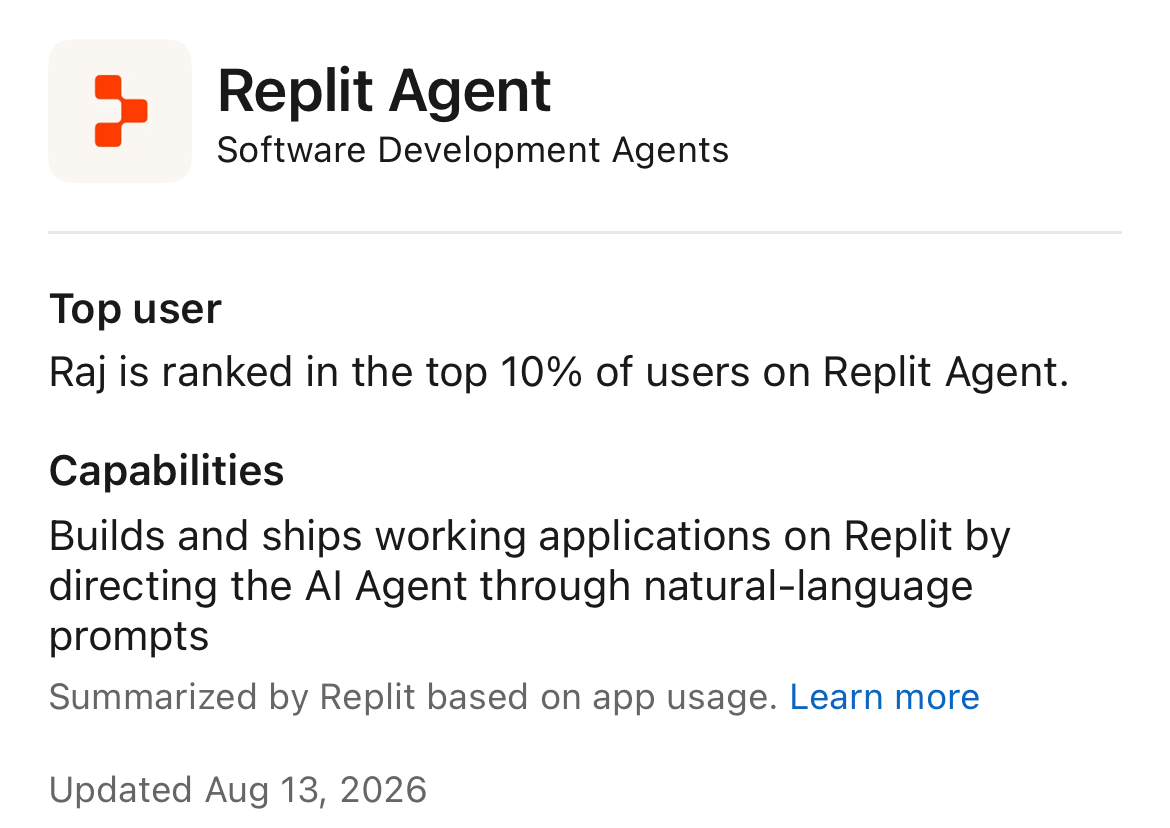
A few caveats up front. This is one company, it’s tiny, and it’s a Salesforce case-study customer. But I’ve built an app on Replit myself (being a top 10% user), so none of this sounds far-fetched to me.
Here’s the encouraging part. SaaStr’s Salesforce usage is up about 10x and their bill is up about 40%. Humans use Salesforce less while agents use it more, and Salesforce gets paid for that activity.
Where I think the change happens
1. Seats. In the old world, an RFP was seats times price plus services. It was almost cookie cutter. If agents do more of the work, the renewal conversation shifts from “how many seats?” to “how much value?” That’s a healthy question, but it means new pricing models.
2. The front door. The agent becomes the interface, and Salesforce becomes one of many data sources. SaaStr said the outside tools they tried, including AIForce, don’t use their proprietary data well yet. That matches my own experience of how hard AIForce is to unlock compared with frontier LLMs, and it’s a real opportunity for Salesforce to close that gap.
3. Pricing. Model inference is a separate contract from Salesforce’s API charges, so there are now two meters running. My side project’s budget went from $100 to $700 on AI usage. I keep wondering how that plays out at a 10M annual license, and that’s where clear, predictable pricing could win trust.
4. Switching costs. Agents make migration, schema mapping and integration rebuilds much cheaper. Lemkin has said he can now move a database, and that what matters is the context, not the record. That puts the spotlight on the years of context Salesforce already holds.
5. Storage. SaaStr’s agents reportedly wrote about 40GB into Salesforce, almost all through the API, and drew overage flags. This one is my guess, not something they said: customers may keep core records in Salesforce and store bulky agent output somewhere cheaper. Salesforce can get ahead of that with smarter storage options.
Why it’s gradual
Enterprise contracts, governance, audit requirements and years of custom logic take time to change. Anyone who’s been through a CRM migration knows that. Salesforce can also control API access, as ServiceTitan reportedly did with Podium when Podium’s agentic tool started acting like a competing system of record.
I’d expect the early changes at the SMB end, where I already think the trial-then-negotiate-with-an-AE model feels dated. That’s a chance to simplify.
The real test
The open question is whether agents can make five things portable: data, context, business logic, integrations and governance. If enterprises can easily move all five, the system of record becomes more of a commodity. That hasn’t been shown at scale.
So the question isn’t “will Salesforce survive?” It’s whether agents will still need Salesforce as the authoritative system of record. If yes, Salesforce becomes increasingly invisible but stays economically important. If no, the bigger SaaS shift gets real.
What I’ll be watching
• Seat counts and net revenue retention at renewals
• Consumption revenue growth alongside seat changes
• Storage and API pricing changes
• Agent-native CRMs winning brand-new customers
• How professional services get priced now that the old seat-based estimate is changing
The Bigger Takeaway
Marc Benioff is right that SaaS isn’t going away. I’d add that it’s changing shape, and the companies that adapt will do well.
The Dreamforce partnerships tell me Salesforce knows this. It’s positioning itself as infrastructure for agents and working with the companies building the layer on top. Smart move or a big bet? I think it’s a smart one, and I’m curious to see how it plays out.
If you work in this space, build something over the weekend and watch what the agent does to your assumptions. Build the change agents you want to see in the world. Let your agents add the value that you are seeking. 😆
Stop scrolling. Start building.

